Generative AI

Generative AI (also known as generative artificial intelligence, Generative AI or GenAI) refers to systems that independently develop new content based on existing data. They recognise patterns, generalise knowledge and use this to generate text, images or programme code. This is changing the role of artificial intelligence: it is becoming increasingly creative and innovative.

This page explains how generative models work, the opportunities and risks they present, and how businesses can strategically integrate the technology into their processes.

What is generative AI?

Generative artificial intelligence (AI), sometimes also referred to as GenAI, refers to systems capable of generating new and original content. This includes text, images, videos, music and software code. Unlike traditional AI methods, which analyse, classify or make predictions, generative AI uses existing information to create something new.

A typical example is a language model that formulates new, meaningful sentences based on billions of words. Image generators work in a similar way, creating a suitable image from a text description.

Development and background

The idea of teaching machines to generate new data is not new. As early as the 1990s, researchers were working on probabilistic models capable of recognising and reproducing simple patterns. The real breakthrough, however, came with deep learning: from around 2013, neural networks such as Variational Autoencoders (VAEs) and Generative Adversarial Networks (GANs) made impressive progress in the realistic generation of images and sounds.

The next major step was the development of so-called Transformer models, which ushered in a new era in natural language processing from 2017 onwards. These models can process large volumes of data in parallel and form the basis for systems such as GPT. Today, large language models (LLMs) such as GPT-4 or Gemini make it possible to generate language, code or even images – thereby transforming entire work processes.

The economic impact is also enormous: according to a study by McKinsey & Company, generative AI could deliver an annual value contribution of between 2.6 and 4.4 trillion US dollars – based solely on the 63 use cases examined.¹ Furthermore, surveys show that 65 per cent of organisations already use generative AI on a regular basis, which highlights its rapid adoption.² This also explains the steadily rising investment in research and development activities in the field of generative models, which increased by 18.7 per cent to US$33.9 billion in 2024.³

What are the defining features of generative AI?

A key characteristic of generative AI is its ability to understand patterns in existing data and derive new content from them. In other words, it does not simply imitate, but combines, generalises and recombines knowledge gained during training.

Another feature is its dependence on input: users control the results via so-called prompts – that is, text inputs that describe the desired content. This enables generative systems to respond very flexibly to requirements.

Furthermore, generative AI is multimodal. It can link information from different sources – such as text, audio or images – and use this to create new forms of content. This sets it apart from many earlier, specialised AI systems.

How generative AI works

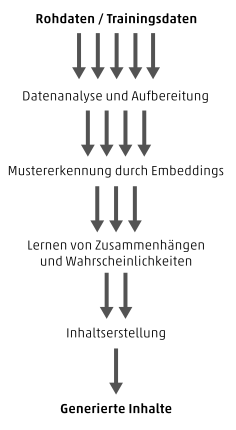
Put simply, a generative model learns to understand the structure of data. During training, it is fed large amounts of data, analyses relationships and recognises which patterns are likely to occur together.

In the case of a text model, this means it learns which words might follow in which context. In the case of an image model, it recognises relationships between colours and shapes. The trained model can then generate new content that is similar to, but not identical to, the training data.

In the case of language models, this is achieved by progressively predicting the next word. The selection is based on probabilities, resulting in creative and sometimes surprising outcomes. Many models are further refined through fine-tuning or human feedback to make them more accurate and reliable.

What is the difference between AI and generative AI?

Artificial intelligence is an umbrella term for systems that perform tasks that would otherwise require human intelligence – such as recognising objects, making decisions or analysing data.

Generative AI is a specific sub-type of this. Whilst traditional AI primarily analyses and reacts, generative AI actively creates new data. For example, a conventional AI recognises a dog in an image. A generative AI, on the other hand, can generate a new image of a dog wearing a spacesuit.

In short: all generative systems are AI, but not all AI is generative.

What is the difference between generative AI and LLM?

Large Language Models (LLMs) are a subset of generative AI. They specialise in language and are trained to understand and generate text. Well-known examples include GPT, Claude and Gemini.

Generative AI, however, encompasses more than just language. It also includes image, audio and video models, such as DALL·E, Midjourney and Stable Diffusion. So whilst an LLM generates text, an image model can generate visual content and a music model can generate sounds.

Are there different types of AI?

Yes, artificial intelligence can be divided into different categories. This classification is based on how autonomously an AI operates, whether it can learn from experience, and whether it develops an awareness of its surroundings. This makes it easier to distinguish current systems from future stages of development.

The four basic types of artificial intelligence

Artificial intelligence is often categorised into four main types, which describe the technological maturity and mode of operation of AI systems.

Type 1: Reactive Machine


These systems respond solely to current inputs and have no memory. They cannot store experiences or learn from the past. A well-known example is IBM’s chess computer Deep Blue, which defeated world chess champion Garry Kasparov in the 1990s.


Type 2: Limited Memory


AI in this category can take past information into account to make better decisions. Applications such as autonomous vehicles utilise this principle by analysing the past movements of other road users in order to better assess the current driving situation.


Type 3: Theory of Mind


This type describes a stage of development that is still theoretical. Such an AI would be capable of understanding the emotions, intentions and thoughts of others and responding to them – much like humans do in social interactions. So far, this form exists only in research.


Type 4: Self-awareness


The highest level, which remains purely hypothetical for the time being. An AI with self-awareness would be conscious of its own existence, capable of reflecting on itself and pursuing its own goals. This concept remains, for the time being, a vision and the subject of both philosophical and technical debate.


Common use cases for generative AI

Generative AI has already found its way into many areas. It provides support both for specific tasks and across various sectors where creativity, analysis and automation play a role.

Typical tasks and functions:

  • Text creation and editing: Automatic generation of articles, newsletters or social media posts – including summaries, headlines and stylistic adaptations to target audiences.
  • Software development: Support with code analysis, test generation, documentation and the writing of new functions in various programming languages.
  • Conversational interfaces: Development of chatbots and voice assistants that interact in natural language, provide context-sensitive responses and adapt to conversational styles.
  • Design and creativity: Generative models create graphics, product designs or audiovisual content tailored to specific requirements.
  • Data preparation: Generative AI generates synthetic data for model validation, simulation or data protection in sensitive areas.
  • Analysis and forecasting: Generation of automated reports, risk analyses or forecasts based on business data.

Applications across various sectors:

  • Public sector: Generative AI is used in administration, urban planning and citizen communication – for example, for automated text summarisation, citizen chatbots or the analysis of public data.
  • Industry and manufacturing: Optimisation of components, materials and production processes through AI-generated design proposals and simulations.
  • Finance and controlling: Automated reporting, anomaly detection, fraud detection and scenario analyses.
  • Medicine and pharmaceuticals: Generative models support the development of new molecular structures, diagnostic tools and personalised treatment approaches.
  • Energy sector: Simulation of energy flows, optimisation of grids, forecasts for electricity demand or CO₂ balances, and automated reporting on sustainability targets.
  • Education and Research: Creation of synthetic learning materials, simulations and training data for scientific experiments.
  • Defence and security: Analysis of scenarios, creation of synthetic training data for simulations and support for decision-making processes in complex situations – always taking ethical and legal frameworks into account.

Use case: Virtual colleague ‘Franziska’

The “Franziska” project illustrates how generative AI can be used in practice to support development and communication processes. As part of an interactive brainstorming session, functional software prototypes are created without traditional programming – from the formulation of ideas through to the implementation logic.

In the process, speech, sound and images are generated dynamically, meetings are summarised automatically, and tasks are organised on digital boards.


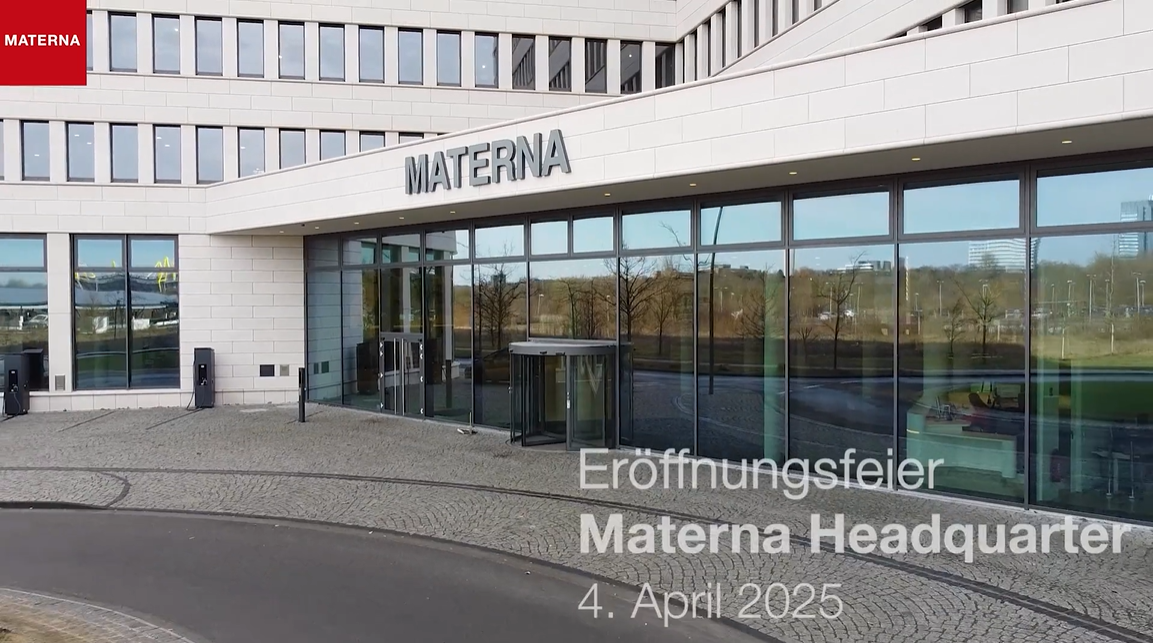
Franziska AI at the opening of the new Materna headquarters

At the official opening of Materna’s new headquarters, Carsten Paasch, Head of the GenAI Competence Centre, presented the artificial intelligence system ‘Franziska’. Together with Dortmund’s Lord Mayor Thomas Westphal, he developed a software solution for a school development plan live during an interactive brainstorming session – without writing a single line of code. All requirements were captured through dialogue with the AI, which generated a fully functional prototype in a matter of seconds. The result thrilled the audience and sparked curiosity about Franziska’s future development.

Watch the video now

Find out more about Franziska


Franziska AI at the opening of the new Materna headquarters

At the official opening of Materna’s new headquarters, Carsten Paasch, Head of the GenAI Competence Centre, presented the artificial intelligence system ‘Franziska’. Together with Dortmund’s Lord Mayor Thomas Westphal, he developed a software solution for a school development plan live during an interactive brainstorming session – without writing a single line of code. All requirements were captured through dialogue with the AI, which generated a fully functional prototype in a matter of seconds. The result thrilled the audience and sparked curiosity about Franziska’s future development.

Watch the video now

Find out more about Franziska

Materna AIDA

With its AIDA development assistant, Materna supports public authorities in software development: AIDA automates code generation based on natural language, integrates error analysis, debugging and automated testing, and relieves developers of routine tasks. This not only boosts efficiency but also promotes digital sovereignty and quality in public sector projects.

Digital Inbox

The Digital Inbox demonstrates how AI-powered automation can be used in public sector organisations and businesses: Incoming documents such as emails, paper documents or online forms are recognised using OCR and AI classification; their content is extracted and automatically forwarded to specialist processes or the e-file system. In this way, the system reduces manual effort, eases the workload on staff and increases processing speed and data quality.

From vision to implementation: Generative AI with Materna

Do you want to not only understand generative AI, but also put it into practice?
Find out here how we support businesses and public sector organisations in the development, integration and scaling of generative AI solutions – from RAG architectures and AI assistance systems to agentic AI applications.

Get advice now

Challenges in implementing generative AI

As great as the potential is, the practical implementation of generative AI is equally complex. Organisations face several challenges:

  • Data quality and data protection: Models are only as good as the data used to train them. Poor or incomplete data leads to distorted results.

  • Computing power and costs: Training large models requires significant resources and energy.

  • Copyright and ethics: Generated content may unintentionally imitate existing works or contain problematic statements.

  • Susceptibility to errors: Generative systems can produce plausible but incorrect information (‘hallucinations’).

  • Integration and governance: To deliver sustainable benefits, AI solutions must be embedded in existing systems and operated under controlled conditions.

Key features of generative AI

Generative AI differs from other forms of AI in several respects. It combines creativity with data intelligence – an interplay that presents both opportunities and risks.

A key feature is interactivity: users steer the outcome through prompts and receive immediate feedback. This gives rise to new forms of collaboration between humans and machines.

Furthermore, generative AI is multimodal and scalable, meaning a model can be trained or adapted for a wide variety of tasks. At the same time, this versatility requires clear rules on ethics, transparency and accountability to prevent misuse.

Outlook for the future: Development trends in generative AI

Generative AI is undergoing a phase of rapid technological advancement. Models are becoming increasingly multimodal, combining text, images, audio and video within a single system. At the same time, specialised domain models are being developed, trained for specific sectors such as medicine, law or public administration.

Another trend is the use of personalised AI systems that adapt dynamically to individual users. Such systems learn from interactions, preferred working styles and contextual information in order to provide increasingly targeted content, recommendations or responses. This shifts the focus from universal models towards bespoke, user-centred AI experiences that boost productivity and relevance, but also bring with them new requirements regarding data protection and transparency.

In addition, agent-based systems are gaining in importance, in which generative models can independently plan, execute and validate tasks. At the same time, regulation and governance are becoming key issues: the European AI Act, guidelines on transparency and the debate surrounding copyright are shaping further development.

In the long term, generative AI will be seen not merely as a creative tool, but as an integral part of digital value creation – ranging from automated knowledge processes to new forms of collaboration between humans and machines.

FAQ

In German, ‘Künstliche Intelligenz (KI)’ and the English term ‘Artificial Intelligence (AI)’ are often used interchangeably. Technically, both refer to the same field.

However, the term ‘AI’ is used more widely internationally, particularly in scientific publications and product names, whilst ‘KI’ is the standard term in German-speaking countries.

An AI-based system recognises, analyses or generates content based on trained data models rather than hard-coded rules. Typical features include adaptive decision-making, self-learning pattern recognition and the ability to respond flexibly to new inputs. Generative AI goes one step further by actively creating new text, images or other content, rather than merely analysing existing data.

The effective use of generative AI requires a fundamental understanding of data quality, prompt design and model limitations. Staff should learn to evaluate AI outputs critically, take ethical considerations into account and design processes in such a way that humans and machines work together effectively. Training on data protection, transparency and responsible use is also part of this.

The quality of generated content can be ensured through multi-stage verification processes. These include automated plausibility checks, human review, the use of fact-checking tools, and the traceability of training data. Companies are increasingly establishing AI governance guidelines to ensure that generated content is accurate, traceable and trustworthy.

Generative AI automates routine tasks and speeds up document creation, communication and decision-making processes. In public administration, for example, applications, letters and reports are generated semi-automatically; in businesses, AI supports product development, analysis and customer interaction. This results in more efficient processes and new job roles that combine human expertise with AI support.

White Paper: AI Solutions

  • Understanding what AI really achieves: Find out how artificial intelligence works, what role it plays in digital transformation – and why it is the key to efficiency, innovation and service quality.
  • Added value for the public sector and business: Discover how companies and public authorities can make targeted use of AI – from process optimisation and intelligent assistance systems to data-driven decision-making.
  • Comprehensive support from Materna: Find out how Materna supports organisations in integrating AI solutions in a responsible, user-centred and technically sound manner – for sustainable and measurable results.

Request the PDF now

Our expert

Portrait vom Ansprechpartner Thomas Feld

Thomas Feld
Vice-President of Data Economics and AI

Latest news from the world of generative AI

Short News
Data & AI
28.08.2026
Corporate Twins: Why leadership needs a flight simulator

In management, wrong decisions can cause considerable damage: to staff, customers, supply chains, the company itself or the environment. However, the consequences are often not immediately apparent. They may be masked by a decline in quarterly…

Read more
Short News
Resilience
Data & AI
28.08.2026
Physical AI Cities: When cities begin to act

A look at Physical AI Cities highlights the potential inherent in an infrastructure that adapts dynamically to new situations – and why it cannot be justified without governance, resilience and democratic control.

Read more
Short News
Resilience
Data & AI
Transport und Logistik
Public Sector
Healthcare
Finanzverwaltung und Zoll
Energy & Utilities
28.08.2026
AI agents: If you automate chaos, you get chaos in real time

On the potential that Agentic AI offers for more productive organisations – and how quickly a lack of governance, unclear processes and overly broad permissions can become a risk.

Read more
Short News
Europe
Sustainability
Data & AI
28.08.2026
Green AI is not a romantic notion

Anyone wishing to operate AI in a sustainable, autonomous and responsible manner must take a holistic view of computing power, energy, governance, cybersecurity and resilience.

Read more
Blog
Data & AI
18.08.2026
From Key Figures to Decisions: The Next Stage in the Evolution of Information Sharing within Organisations

Companies today measure almost everything. Capacity utilisation, project metrics, turnover, margins and forecasts are available at any time in…

Read more
Press
Corporate
Data & AI
Public Sector
Dortmund
17.06.2026
SPARK, the AI for public authorities: Materna group helps public authorities speed up approval processes

With the launch of SPARK Workflow, public authorities now have access to a centralised AI-powered tool to process planning and approval procedures more quickly. As a member of the consortium responsible for the project, the Materna Group is…

Read more
Blog
Data & AI
10.06.2026
SmartLivingNEXT – How a data space brings together housing, care and energy

SmartLivingNEXT brings together homes, neighbourhoods and services. This benefits residents, care providers, energy suppliers and landlords.…

Read more
Blog
Data & AI
Versicherungen
16.04.2026
Maternas Fraud Shield: Secure claims reporting across all channels

Imagine this: a policyholder reports a claim quickly and easily via their trusted app. Seconds later, the claim has been recorded, the fraud check…

Read more
Blog
Data & AI
07.04.2026
97% reduction in workload: How AI is revolutionising line safety for transmission system operators

A real-world example illustrates what is possible when the underlying data is sound – and why human input remains indispensable nonetheless.

Read more
Short News
Corporate
Data & AI
Cloud Transformation
26.03.2026
Lünendonk Study 2026: Materna strengthens digital autonomy through AI, cloud and IT strategies

The new Lünendonk study on digital sovereignty shows that companies are under increasing pressure to reduce their IT dependencies and strengthen their…

Read more