Digital value creation for insurers

With modern platforms, AI-powered services and resilient digital ecosystems.

Digitalisation in the insurance sector

The insurance sector is under significant pressure to transform: rising customer expectations, regulatory requirements and efficiency targets are coming up against established IT landscapes. Flexible platforms, intelligent AI services and resilient digital ecosystems are needed as the basis for sustainable value creation. To remain competitive, insurers must consistently develop their digital infrastructure. We make this transformation manageable and lay the foundations for sustainable value creation – with platform solutions, AI-powered services and resilient digital ecosystems.

Materna supports insurers in implementing this transformation in a structured manner. With modern platform solutions, AI-powered services and resilient digital ecosystems, we create the basis for efficient processes, better customer experiences and sustainable value creation – with sound technical expertise, technological proficiency and regulatory compliance.

A selection of our references in the insurance sector

ARAG

R+V Insurance

HDI

Generali

Swiss Life

Provincial

Munich Re

W&W Group

BarmeniaGothaer

WWK Insurance

DEVK

ERGO

vpv Insurance

Industry challenge: complexity meets the need for action

The insurance sector finds itself caught between conflicting pressures:

  • Legacy IT environments characterised by high complexity, silos and high operating costs are holding back innovation and slowing time-to-market.
  • Rising customer expectations for digital, fast and cross-channel services are increasingly aligned with platform and big tech standards – not with traditional insurance processes.
  • Increasing regulatory requirements (including DORA, NIS2 and FIDA) demand resilient, transparent and auditable IT and process landscapes.
  • At the same time, insurers are under massive pressure to improve efficiency and reduce costs, particularly in service, claims and back-office processes.

The key challenge: transformation must be achieved whilst business continues as usual – without compromising stability, compliance or customer satisfaction.

Our solution areas for the insurance sector

Materna takes a holistic approach to the key transformation trends in the insurance sector: from platform-based IT modernisation, through AI-powered services and end-to-end customer journeys, to regulatory resilience and organisational change – all delivered in an integrated, manageable and sustainable manner.

Replacing monolithic IT systems with modular platform architectures


Digital platforms form the backbone of modern insurers. Materna provides support in establishing and further developing platform-based architectures that integrate processes, data and services and enable innovation at scale – including cloud, process and integration strategies. 


Customer-centricity across all touchpoints


End-to-end digitalisation of the customer journey – from application through to service and claims. Materna designs seamless, intuitive and AI-powered journeys that reduce processing times, ease the burden on service organisations and measurably improve the customer experience. 


AI is becoming productive, scalable and business-critical


Materna integrates AI specifically into insurance-related processes – for example, in customer service, claims management, input management and fraud detection. The focus is on intelligent automation, decision support and the practical application of generative and agent-based AI. 


Improving efficiency in retail banking and back-office operations


End-to-end process consultancy, orchestration of complex process chains and automation of business-critical processes – including the integration of existing business procedures and legacy systems. The aim is to achieve efficient, stable operations with a high degree of scalability. 


Data as a strategic value driver


Materna enables insurers to systematically harness their data – for better decision-making, new services and data-driven business models. Data, AI and specialist expertise are brought together within an integrated architecture.


Regulation influences architecture and operations


Designed with regulatory compliance in mind from the outset: Materna helps insurers build resilient, auditable and self-sufficient IT and process environments that meet the increasing demands for security, availability and traceability – without compromising their ability to innovate.


Use Cases

Omnichannel service & automated service processes

Materna orchestrates complex end-to-end service processes for insurers – from digital self-service to claims handling. All touchpoints interlock seamlessly and are managed via state-of-the-art platforms.

Added value:

  • End-to-end service processes
  • High degree of automation
  • Scalable whilst in operation

Find out more in the white paper

Platform-based process landscape for insurers

Materna modernises business-critical process landscapes for insurers – from strategic classification through to architecture and migration, right through to secure, autonomous operation. Scalable platforms lay the foundations for efficiency, compliance and innovation.

Added value:

  • Future-proof process architecture
  • Regulatory resilience (e.g. DORA)
  • Operation from a single source

An integrated customer experience in the event of a claim

A claim is the moment of truth. Materna implements integrated claims and service processes that link channels, systems and organisational units – seamlessly, transparently and efficiently.

Added value:

  • Noticeably better customer experiences
  • Shorter processing times
  • Reduced workload for service and claims organisations

AI-powered fraud detection in the claims process

Materna makes targeted use of artificial intelligence in claims management – for example, for the automated analysis of documents and images and for the early detection of fraud. Decisions remain transparent and verifiable.

Added value:

  • Reduced claims ratio
  • Faster processing
  • Reduced workload for claims handlers

That’s why Materna...

Materna is an experienced digitalisation partner for the insurance sector. We support insurance companies in modernising complex IT environments, streamlining processes and developing digital services in a way that is secure, scalable and customer-centric. In doing so, we combine technological excellence with a deep understanding of business processes, regulatory requirements and high security standards.

Consultancy, implementation and operation from a single source

We support insurers every step of the way – from strategic planning through to architecture, implementation and integration, right through to the long-term, stable operation of business-critical systems. This ensures there are no gaps between the concept, implementation and operational responsibility.

In-depth industry and process expertise in the insurance sector

We combine an understanding of the insurance sector with in-depth IT and process expertise – particularly in claims, service, portfolio and cross-functional processes. Transformation is always approached from a business perspective, not purely from a technological one.

Platform-based transformation rather than a ‘big bang’ approach

Our approach is based on a modular, platform-based modernisation of established IT landscapes. Existing systems are integrated, further developed or selectively replaced – without the risk of a radical system overhaul.

Confident, regulatory-compliant operations

Digital sovereignty is at the heart of our positioning: our solutions are auditable, resilient and compliant with regulatory requirements (including BaFin, DORA and NIS2). Insurers retain control over architecture, data and operations – even in cloud and AI scenarios.

AI with measurable benefits – not an end in itself

Materna integrates AI into insurance-specific processes in a targeted and pragmatic way – for example, in claims management, customer service and input management. The focus is on automation, reducing the workload on staff and ensuring transparent decision-making, rather than on showcasing technology.

End-to-end thinking across organisational and system boundaries

We orchestrate complex end-to-end processes across channels, departments, platforms and legacy systems. Customer experience, back-office operations and IT work seamlessly together – rather than reinforcing silos.

In-depth analyses

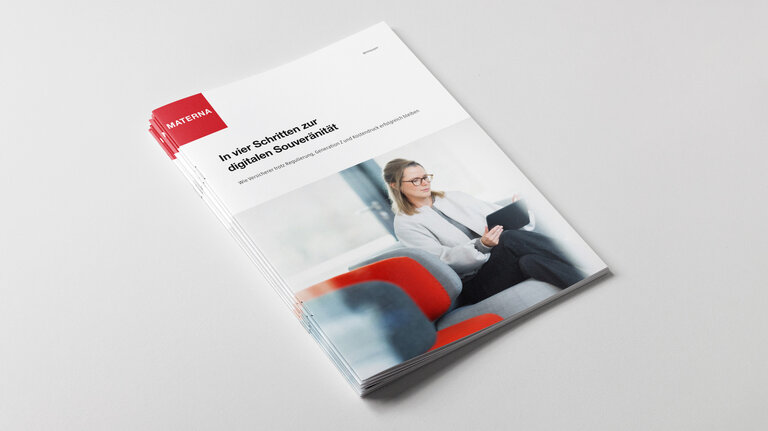
Four steps to digital sovereignty

How insurers remain successful despite regulation, Generation Z and cost pressures.

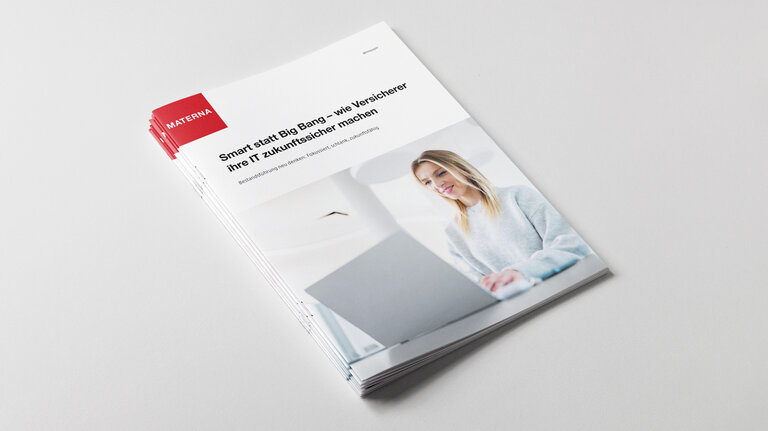
Smart rather than a Big Bang – how insurers are future-proofing their IT

Rethinking inventory management: focused, streamlined, future-proof.

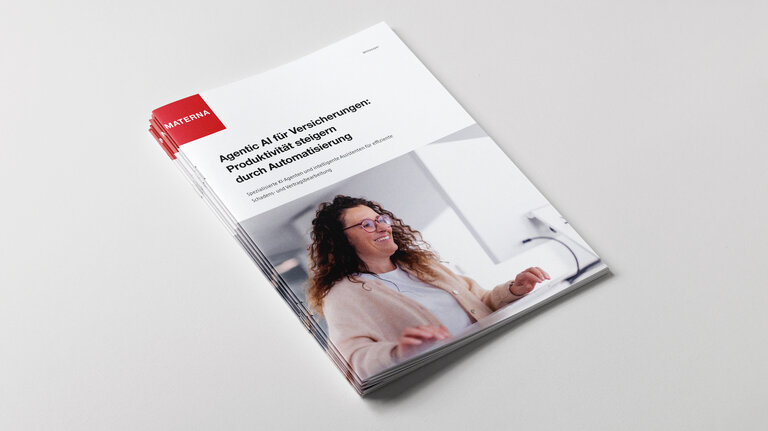
Agentic AI: Boosting productivity through automation

Specialised AI agents and intelligent assistants for efficient claims and contract processing

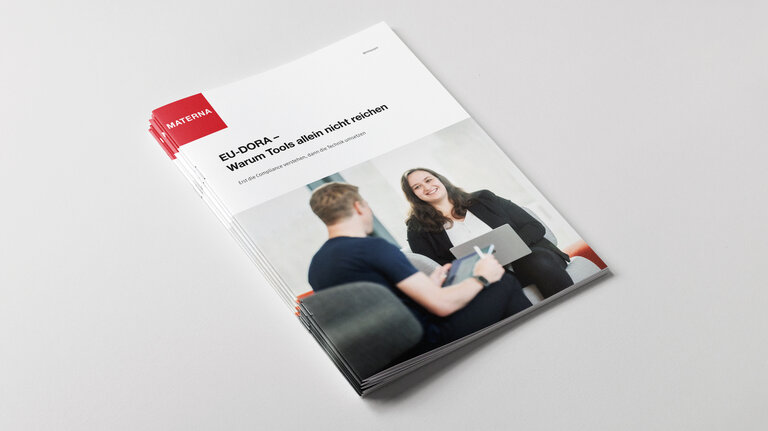
EU-DORA – why tools alone are not enough

Understand compliance first, then implement the technology

FiDA – Financial Data Access

From 2027, FiDA will become the mandatory standard for the exchange of financial data in the EU. Materna supports insurance companies every step of the way on their journey towards FiDA readiness – with a clear strategy, concrete measures and tailor-made services.

Our partners in the insurance sector

Together with strong partners, we develop innovative, secure IT solutions and drive forward the digital transformation of the insurance industry in a sustainable manner.

And our forum partnership

Driving change together: Materna and Versicherungsforen Leipzig

As a partner of Versicherungsforen Leipzig, Materna brings its technological expertise to bear in a targeted manner within the industry-wide exchange and, together with leading market players, is actively shaping the future of the insurance industry. Versicherungsforen Leipzig provides a central platform for knowledge transfer, innovation and dialogue within the sector. As a forum partner, Materna is part of this network and actively participates in:

  • technical discussions on current industry topics
  • the development of practical solutions
  • the sharing of best practices from projects and client initiatives

This generates concrete impetus for the digital transformation of insurers.

FAQ: How Materna can support insurance companies


Question: What does digital sovereignty actually mean for insurance companies? 

Answer: Digital sovereignty means striking the optimal balance between performance, independence and cost-effectiveness. We work with you to analyse your current position within this ‘sovereignty triangle’ and develop strategies to maximise your freedom of action. In doing so, we take into account your specific market situation as well as current regulatory and technological requirements. 

Question: Why is digital sovereignty so important for insurers right now? 

 Answer: Insurers are facing multiple pressures: increasing regulation through DORA and CSRD, changing customer expectations from Generation Z, rising cost pressures from legacy systems, as well as political uncertainty and transatlantic sensitivities. Digital sovereignty is vital to your long-term viability. It enables you to respond flexibly to market changes without becoming technologically dependent. 

Question: How can we resolve the tension between independence and cost-effectiveness? 

Answer: We work with you to identify the areas where independence is particularly important – such as critical core processes. For these, we develop solutions based on open standards and modular architectures. In other areas, it may be more cost-effective to integrate cloud services. The key lies in a nuanced strategy that strikes the optimal balance for each area. 

Question: How can we maintain digital sovereignty despite legacy systems? 

Answer: We analyse your existing system landscape and identify the biggest obstacles to digital sovereignty. Instead of a high-risk, complete overhaul, we develop a modular modernisation strategy comprising manageable sub-projects. Modern API approaches make it possible to modernise legacy systems step by step whilst simultaneously integrating new digital services. This allows you to regain flexibility without jeopardising existing business processes. 

Question: How does Materna support us on our journey towards greater digital sovereignty? 

Answer: We begin with a structured sovereignty assessment that evaluates your current position and identifies areas for action. Building on this, we develop a bespoke strategy with concrete measures. When it comes to implementation, we focus on manageable sub-projects delivering quick wins rather than protracted, mammoth projects. Our experts combine technological know-how with industry expertise to deliver practical solutions. 

Question: What specific benefits does greater digital sovereignty bring us? 

Answer: You gain strategic flexibility to pursue your business objectives unhindered and improve your negotiating position with technology providers. In the regulatory sphere, you benefit from more efficient compliance through greater control over your data. At the same time, you increase your resilience against external disruptions and can reduce your operating costs through automation and self-service. 

Question: How can the automation of compliance processes ease the burden on insurance companies? 

Answer: As strategic advisers, we support you in analysing your compliance processes. We identify opportunities for automation and develop bespoke solutions. Our aim is to relieve your staff of manual reporting processes so that they can focus on their core tasks again. Every situation requires a bespoke strategy. 

Question: How does Materna approach the implementation of DORA requirements? 

Answer: We begin with a comprehensive current-state analysis and gap analysis of your existing processes. 

Building on this, we develop a suitable compliance framework and a regulatory data model. Our process model is tried and tested, but we tailor every implementation to your specific requirements and systems. 

Question: How can insurers ensure that their legacy systems can meet the DORA requirements? 

Answer: Legacy systems do not necessarily need to be replaced for DORA. We work with you to analyse which of your existing systems are relevant for reporting and how we can extract data from them. Instead of costly complete overhauls, we develop intelligent bridging solutions that make your historical data usable. We develop this strategy individually for your specific system landscape. 


Question: How can companies use digital channels to explain complex insurance products? 

Answer: In workshops, we analyse your products and develop suitable digital explanatory formats. Depending on the target audience, these can range from interactive videos to personalised self-service journeys. 

We advise you on the possibilities offered by modern AI and develop digital assistants that present complex concepts in an understandable way – perfectly tailored to the expectations of young target groups. 

Question: How can insurers design digital touchpoints so that they actually reach Generation Z? 

Answer: Generation Z expects seamless digital experiences on their preferred channels. We work with you to develop modern touchpoints such as WhatsApp integration for advice and claims reporting. 

Drawing on our expertise, we design the entire process – from multimedia claims documentation via smartphone to a fully digital application process with voice and chat support. This enables you to reach young target groups where they are active every day. 

Question: How can digital channels contribute to optimising business value as well as acquiring new customers? 

Answer: Digital channels offer far more than just customer acquisition. Our solutions automatically identify cross-selling and up-selling opportunities and address them directly. When policy changes are made, the system immediately checks the impact on premiums and presents the consequences transparently. In the event of major claims such as storms or hail, digital channels enable the necessary scalability to process aggregate claims efficiently. This allows you to boost both efficiency and customer satisfaction in equal measure. 

Question: How do modern AI assistants differ from traditional chatbots? 

Answer: The new generation of AI assistants offers a completely different user experience to traditional chatbots. They actually understand customer enquiries and do not simply provide pre-defined answers. Following an analysis of your service enquiries, we develop an AI service concept that will delight your customers and significantly reduce the workload on your staff. 

Question: What benefits do case handlers gain from using AI assistants? 

Answer: Our AI assistants for customer service staff offer three key benefits: they proactively provide relevant information whilst the staff member is handling a case. They deliver context-sensitive recommendations for action with direct access to functions. And they suggest the next steps in customer support. This significantly reduces the time spent searching for information, allowing your staff to focus on advising customers. 

Question: For which communication channels (telephone, email, chat, etc.) is the use of AI suitable? 

Answer: Artificial intelligence can support communication with customers across all digital channels. Smart channel management utilises AI for data analysis and automation to optimise interactions across all channels. 

Agent-assist solutions can be deployed at three stages of a customer service agent’s workflow: before, during and after a phone call or chat. 

AI assistants handle: 

  • Analysing and pre-qualifying the enquiry
  • Recording information such as the customer’s name, enquiry and authentication status
  • Lead qualification to assess customer value and potential for cross-selling and upselling
  • Real-time transcription and documentation of telephone calls
  • Real-time coaching
  • Analysis of the conversation and follow-up with tips
  • Escalation of sensitive cases to a human agent 

Question: What should insurers do before actually modernising their legacy systems? 

Answer: Before investing in new technologies, the rule is: sort things out first, then modernise. We’ll help you start by focusing on your business services and deciding which ones are truly strategically important. We then work with you to streamline your business processes and identify opportunities for automation. This preparatory work is crucial – it reduces complexity, cuts costs and lays the foundations for a successful IT modernisation free from unnecessary baggage. 

Question: How can companies modernise their legacy systems without taking on major risks? 

Answer: We analyse your IT landscape and develop a tailor-made modernisation strategy comprising manageable sub-projects. Instead of a risky ‘big bang’ approach, we opt for a modular, step-by-step transformation. We guide you through the entire transformation process and ensure a secure migration that meets your specific requirements and resources. 

Question: What benefits can insurance companies expect from IT modernisation? 

Answer: Modernising your IT landscape creates new scope for action in line with your corporate strategy. We identify the key potential benefits within your specific context – whether that’s greater agility, better compliance with regulatory requirements or the ability to offer new digital services. Our focus is on measurable improvements that align with your business strategy. 

Question: How effective can AI be in detecting insurance fraud? 

Answer: Its effectiveness depends heavily on your individual situation. Following an analysis of your claims history and the identification of potential fraud patterns, we develop a tailored approach to fraud detection. With optimised, AI-based fraud detection, you can significantly reduce your claims ratio. 

Question: How does Materna go about developing an AI-based fraud detection system? 

Answer: We begin by analysing your claims history and existing processes. Building on this, we develop a bespoke fraud detection strategy and integrate it seamlessly into your systems and processes. We also support you in continuous improvement, ensuring your solution becomes increasingly accurate through ongoing learning. 

Question: How can insurance companies utilise the EU Data Act to develop new insurance products? 

Answer: Following an analysis of your data assets and potential use cases, we develop strategies for usage-based insurance. The EU Data Act requires manufacturers to provide interfaces for the transmission of usage data. We develop a tailored concept for your business and support you with implementation – from the data platform right through to integration with your existing systems. 

Question: What competitive advantages can data-driven business models offer? 

Answer: The competitive advantages are varied and depend on your specific market position. We identify which data-driven approaches offer you the greatest added value – whether through personalised premiums, improved risk assessment or greater customer loyalty. From strategy to implementation, we support you in leveraging your data profitably and differentiating yourself from the competition. 

Act to Strengthen Accessibility

The Accessibility Enhancement Act (BFSG) comes into force on 28 June 2025. This Act requires the private sector to ensure that its digital products and services for end users are accessible. Insurers must also ensure that their digital offerings comply with the new legal requirements. This will require extensive adjustments and ongoing reviews.

Please feel free to contact us

Bernd Lohmeyer
Insurance Transformation Strategist

Nadine Heinze
Teamlead Insurances