Innovative business models of the future

Shaping the digital transformation with the IoT.

IoT strategies: business models of the future

Discover the business models of the future: with the Internet of Things (IoT), companies are shaping the digital transformation, optimising processes and creating innovative solutions. Find out how IoT technologies promote sustainable value creation and efficiency. 

Insights into innovative business models of the future

Innovative business models describe new forms of value creation in which digital technologies, data or platforms are used to fundamentally transform or recombine products, services or revenue models.

Innovative business models enable companies to tap into new sources of revenue, better meet customer needs, automate processes and set themselves apart from the competition in the long term.

Innovative business models emerge from the systematic analysis of the market, customers and technologies, combined with methods such as business model innovation, design thinking, prototyping and iterative validation.

The current state of affairs in the IoT sector

We are in the midst of the digital transformation. Digitalisation is having a profound impact on the economy and the world of work, as well as on public and private life. Technologies such as artificial intelligence (AI), big data and the Internet of Things (IoT) are rapidly transforming all areas of life. Companies face a choice: will they be driven by this change, or will they actively help shape it? Some companies have decided to push for change proactively, whilst others remain rather indecisive or even uncertain. 

Why you should get in touch with us 

  • Numerous customers rely on Materna when developing forward-looking business models.
  • Together, we develop more efficient processes and identify opportunities for value creation that can be realised with the support of IoT.
  • Support in developing innovative business models through ‘value innovation’
  • Years of expertise in tackling the challenges of digital transformation
  • Bespoke IoT solutions to adapt existing value propositions and develop new ones
  • Together, we foster creativity and adaptability to ensure your long-term success. 

Update on the EU Data Act and the IoT

With the ever-increasing importance of data, companies in the industrial sector with an IoT focus face a multitude of challenges – but above all, opportunities. Seize the opportunity to develop forward-looking data strategies. You can read all the key information in our white paper and on our dedicated information page on the EU Data Act.

Download the white paper now

Go to the information page

EU AI Act & Governance

(Part of the EAM white paper package)

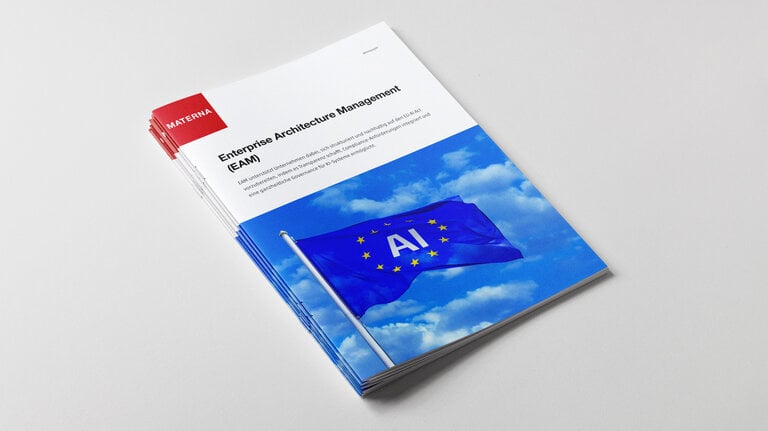
Hardly a quarter goes by without new EU regulations and directives affecting our business operations. The most recent example is the EU AI Act, which requires organisations to carry out risk-based analyses of planned and existing AI systems, as well as the data processed by them. Find out which questions your organisation needs to answer in our white paper.

References

Tool-O-Mat

Smart Home Control

Service App

Behind it all is Materna

Smart indoor climate control for greater sustainability 

The Finnish Purmo Group is expanding its product portfolio to include another smart home solution for controlling heating systems. In doing so, it is reviewing its entire IoT strategy. As an IoT expert, Materna is supporting the company with technical and contractual consultancy services, as well as in supplier management. 

Read the feature article 

Sustainable IoT: How a Tool-O-Mat helps conserve resources 

Fewer kilometres on the clock, more data exchanged, a better range of services – the international tool manufacturer CERATIZIT has modernised its distribution concept through digitalisation. The tools are stored in smart vending machines on-site at customers’ premises, and data exchange via the cloud creates real added value across the entire delivery process. 

Read more: Monitor article, blog post, podcast 

How Hobart is benefiting from the Internet of Things in the kitchen

Materna has developed an award-winning app for Hobart, which is available to both customers and service staff on iOS and Android devices. The app is aimed at canteen and restaurant operators who use the manufacturer’s electronic equipment. It provides status data, error messages and information on consumption and costs. It also offers detailed usage statistics, which enable more efficient planning of maintenance cycles and the stocking of consumables. In the event of problems, the app displays easy-to-understand troubleshooting guides. 

Read the technical article

Three stages of innovation

1. Business Transfer

As a driving force or co-creator 

Digital transformation presents both opportunities and challenges for businesses. Technological and economic processes are changing, and traditional business models are being challenged by connected solutions. Businesses that actively shape this transformation create new value and expand their portfolio. 

2. Value Innovation

From Co-Creator to Innovator 

When it comes to developing new business models, simply modifying existing values is not enough. The concept of ‘value innovation’ aims to achieve sustainable success by tapping into new markets. Companies must act as innovators and harness digitalisation to drive innovative approaches. 

3. The Internet of Things as a driver of innovation

Real-time monitoring

The Internet of Things (IoT) in plant engineering enables machines fitted with sensors to monitor operational data in real time (condition monitoring). Using this data, you can predict breakdowns (predictive maintenance), which allows companies to offer additional services. 

Three steps to your goal

Materna’s IoT Approach – Your Path to Digital Transformation

From chaos to structure – analysing your current situation 

The first step begins with an ‘open discussion’ to determine which zone the company is starting in.

Zone I 

Companies that use incomplete or partially effective solutions, but fail to achieve their desired objectives. 

Zone II 

Companies that have established IT systems and are already using them to generate added value from data, such as innovative solutions or new business models. 

Whatever your company’s level of maturity, we’ll get you ready for the market. 

Technology Selection vs. Requirements – Developing Tailor-Made Strategies for Your Digital Future 

 During the structural dialogue, we define the current situation and lay the foundations for a successful collaboration. Together, we identify challenges and establish a clear framework. We support you in defining clear target requirements and identifying relevant technologies. In this way, we guide you from the chaotic or complex area into the ‘structured’ area (Zone III). You will gain valuable insights into our methods and approaches, which will help you make well-informed decisions. 

Practical from the very start – practical approaches for sustainable success 

Our ‘Zone IV’ workshop offers a comprehensive introduction to our IoT approach. We place particular emphasis on collaboration between your team and our experts. Through interactive workshops, we impart theoretical knowledge and practical application so that participants can implement the methods they have learnt straight away. At the end of the workshop, you will receive your MVP (Minimum Viable Product). This will help you to identify key service elements such as [example of service elements]. 

Innovation is easier than you think!

Adaptation and further development

Innovation arises from the adaptation and further development of existing ideas

Successful companies make use of existing expertise and skilfully adapt it to market needs. The key to their success lies in their ability to learn continuously and respond flexibly to change.

Own less, earn more

Innovation can be successful even at low cost

In the age of digitalisation, successful digital companies are demonstrating that successful business models do not necessarily require high levels of investment. Their success is based on smart digital strategies and the principle of ‘own less, earn more’, which enables cost-effective innovation. 

Customer focus as the key

Innovative breakthroughs are based on the intelligent application of existing technologies

Technological progress is important, but innovative breakthroughs often arise from the clever use of existing technologies. A good example is a streaming provider that did not invent new streaming technologies, but successfully used them to revolutionise the traditional TV business. The breakthrough lay in the customer-focused application of the technology, not in the technology itself. 

Paths to Innovation

Innovation can emerge anywhere 

Innovation is not limited to specific teams or programmes. It arises wherever customer problems are solved most effectively. This can happen within the innovation team, amongst staff during the development phase, or even directly with the customer themselves. Creativity and a focus on solutions find their way into all areas. 

Please feel free to contact us

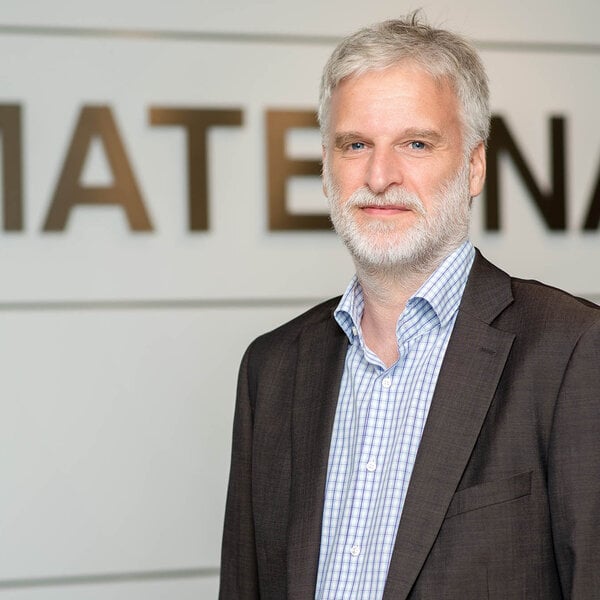
Portrait von Ansprechpartner Marcus Goetting

Marcus Götting
Leiter Competence Center IoT