Design brings people together

People-centred, data-driven and tech-savvy. We combine all three approaches to develop tailored and user-friendly solutions.

Experience Design

Design brings people, processes and technology together to create a cohesive user experience. At its heart is an understanding of how people interact with digital solutions and what they really need. Consistent, intuitive experiences build trust, boost efficiency and ensure long-term acceptance.

Everything you need to know about user experience

UX design involves the strategic planning and design of the user experience for digital products such as websites, apps and platforms. The aim is to understand users’ needs, expectations and behaviours and to use this insight to develop intuitive user experiences. Good UX design ensures that digital products are simple, efficient and pleasant to use. It forms the basis for high customer satisfaction and long-term brand loyalty.

UI design (User Interface Design) refers to the visual design of the user interface – in other words, what users actually see and interact with. This includes layouts, colours, typography, buttons and icons. The aim of UI design is to create an aesthetically pleasing and clearly structured interface that enhances the user experience. Good UI design combines functionality with design aesthetics, thereby promoting intuitive interaction.

UX (User Experience) and UI (User Interface) are closely intertwined to create an optimal digital experience. Whilst UX focuses on the functional and emotional aspects of the user experience, UI is responsible for the visual design and usability. Together, they ensure that products not only look good, but also feel good and are easy to use. Successful digital solutions are always based on a balanced interplay between UX and UI.

Service design takes a holistic, user-centred approach to shaping services. All touchpoints – both digital and physical – are linked in such a way as to create a consistent, positive experience. The aim is to make processes clear, efficient and appealing.

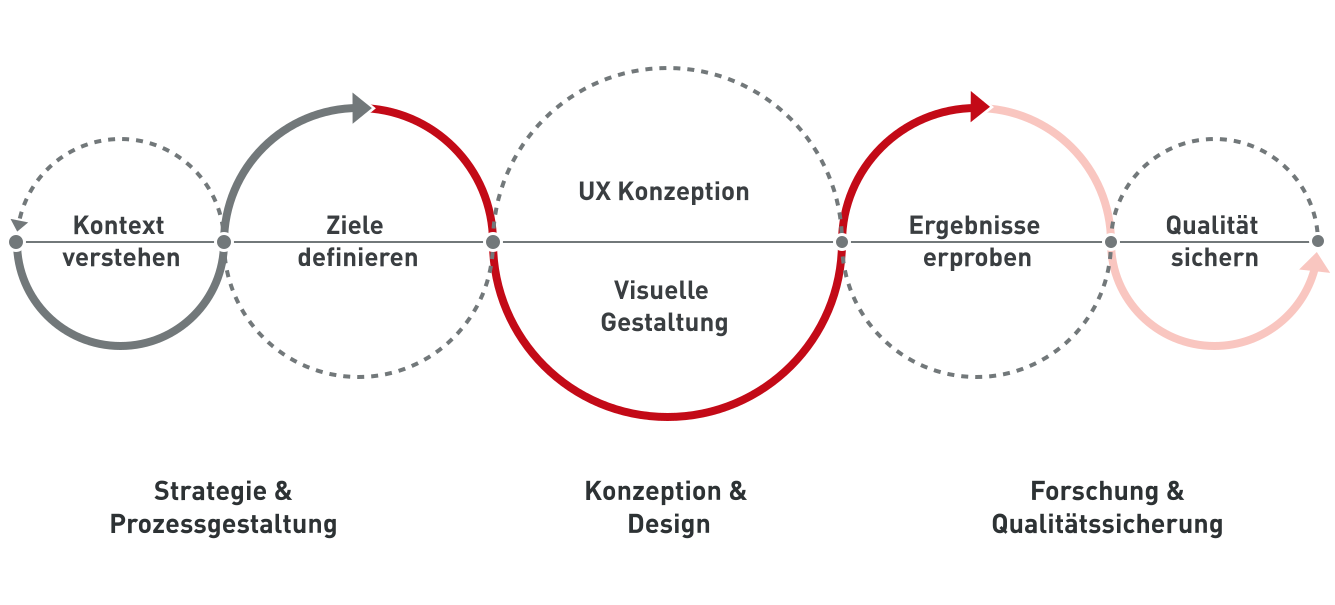
Strategy & Process Design: Clearly defining the direction of digital projects

We ensure that digital products and services are clearly defined from the outset. Through structured planning, scoping and goal definition, we lay the foundations for economically viable and user-centred solutions. In workshops and throughout the project, we ensure that projects run efficiently, that stakeholders work together in a coordinated manner, and that users’ needs are taken into account from the very beginning.

The framework and objectives for good UX in projects are precisely defined to ensure a clear direction and efficient implementation. Analysis, prioritisation and structured planning lay the foundations for user-centred solutions that are functional, consistent and sustainable.

Services are designed to provide effective support and inspire people. By analysing user journeys, touchpoints and processes, we develop integrated solutions that are functional, easy to understand and have a lasting impact.

Ideas are born out of user needs and reinforce brand values. Structured creative methods and workshops foster diversity and innovation, resulting in concepts that inspire, persuade and have a lasting impact.

Facilitation and process support ensure a clear structure in complex projects. Through targeted facilitation, different perspectives are brought together, decision-making is made easier and collaboration is strengthened. This results in user-centred solutions that are implemented efficiently, consistently and sustainably.

Concept & Design: Making digital solutions easy to understand

We combine analysis, creativity and technical feasibility to create consistent digital experiences. Information architecture, user guidance and visual design are crafted to ensure that solutions are intuitive to use and easy to understand. We optimise existing products in a targeted manner and translate the insights gained into clear, actionable design decisions.

Digital ideas are visualised and tested at an early stage to incorporate direct feedback. Interactive prototypes bring concepts to life, enable optimisation and promote user-centred development – resulting in solutions that work and win people over.

Information architectures organise content in a logical and clear manner. Well-designed navigation, clear categorisation and logical hierarchies make it easier to find your way around and enable quick access to relevant information.

Page types and modular components present content in a structured, flexible and consistent manner. Reusable modules enable efficient page layout, easy customisation and scalability – resulting in digital products with clear navigation and a consistent look and feel.

Design languages and design systems give tangible form to brand identity and user guidance. Structured components, clear guidelines and modular design ensure consistent solutions that are flexible, scalable and can be used across platforms.

Digital interfaces adapt flexibly to all devices and respond intuitively to user interactions. Responsive layouts and well-thought-out interaction design create experiences that are both enjoyable and compelling.

Research & Quality Assurance:
Basing decisions on facts

We check whether digital solutions work and meet users’ expectations. User research, expert reviews, usability tests and qualitative and quantitative analyses provide a solid foundation for well-informed decisions. This results in sustainable quality – both from the users’ perspective and in terms of business objectives.

Targeted surveys and interviews provide insight into users’ perspectives, expectations and needs. The insights gained provide a solid foundation for decisions that take both user-centred design and brand relevance into account.

Digital products are tested with real users in order to identify weaknesses at an early stage and implement targeted improvements. Iterative testing ensures that applications are intuitive, efficient and a pleasure to use.

Design decisions are based on a clear understanding of the target audiences and their needs. By identifying potential user groups and analysing their expectations, we establish a solid foundation for user-centred design. This enables us to develop digital solutions that are relevant, intuitive and effective.

Products are evaluated from the perspective of UX experts to identify areas for improvement in terms of structure, interaction and design. Practical recommendations ensure lasting improvements in quality and user-friendliness.

The success of digital products and services is measured using defined KPIs and user feedback. Analytical methods and benchmarks provide transparency, assess the impact of initiatives and identify areas for targeted optimisation.

The creative design process

Please feel free to contact us

Potrait von Ansprechpartner Michael Bubendey

Michael Bubendey
Head of Competence Center UX Design

Book an appointment now

Book an appointment with us and find out how you can further optimise your experience design.