10.04.2024
Blog
Sustainability

Future-proof data infrastructure: the key to effective ESG management

Given the growing importance of the European Sustainability Reporting Standards (ESRS), companies face the complex task of presenting their sustainability efforts in a transparent and authentic manner. The collection of relevant data is often carried out manually and is therefore both error-prone and resource-intensive. An innovative, future-proof data infrastructure is thus key to effective ESG management and authenticity in reporting.

Matthis Berghoff
Digital Strategy Consultant

A comprehensive data strategy and robust infrastructure not only support ESG management, but also form the basis for ESG-related analytics use cases and compliance with future regulations. It enables companies to make informed decisions whilst creating added value through increased transparency and credibility in ESG reporting. Automating data collection significantly reduces the time and resources required. All relevant data required for producing a CSR report in accordance with ESRS or for meeting the requirements of the Supply Chain Due Diligence Act (LkSG) is available quickly and cost-effectively. Data collection can be largely automated, thereby reducing the time and staff required.
The comprehensive availability of ESG data opens up new opportunities for implementing analytics applications, such as automated life-cycle analyses. These analyses enable companies to efficiently determine the environmental footprint of their products and contribute to more sustainable production methods. Furthermore, transparency towards trading partners strengthens confidence in the environmental profile of products, which is of crucial importance in view of increasing regulatory requirements.

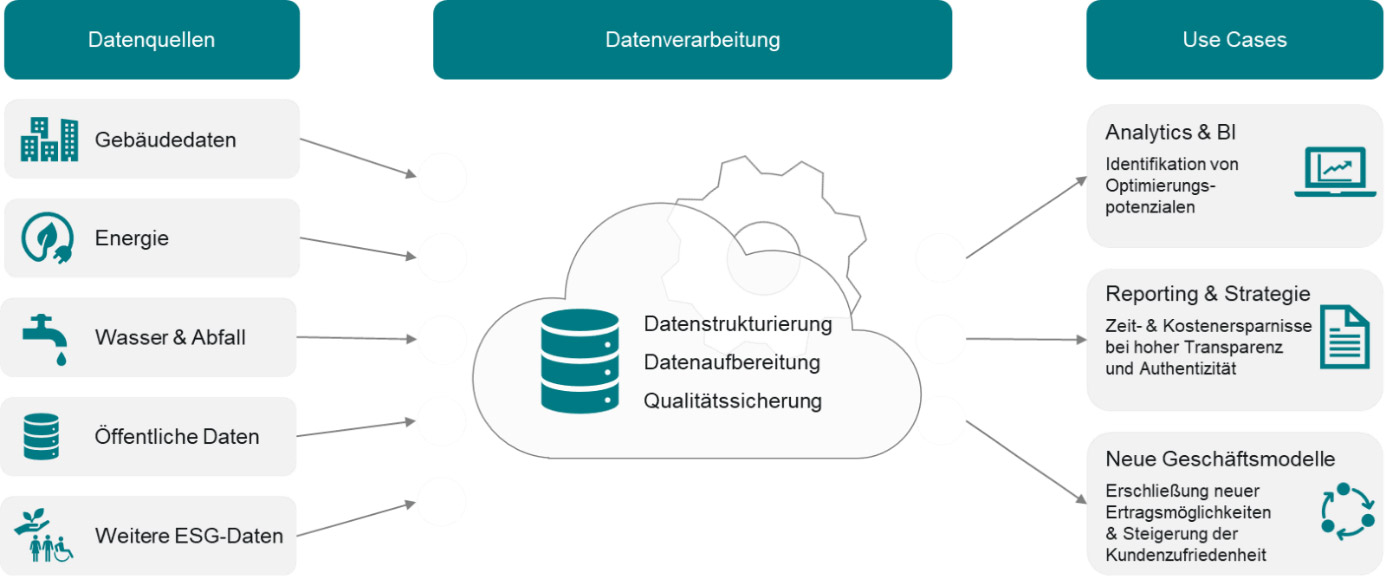
An effective data infrastructure that incorporates ESG data comprises various components and, as part of an integrated approach, encompasses data collection, data processing and use cases:

  • Data sources: These include energy data from sensors and smart meters, information on waste and water, data from ERP systems and other tools, building data, and publicly available data.
  • Data Lakehouse: This is where data preparation and quality checks take place. The Data Lakehouse serves as a central repository for all relevant data required, for example, for reporting or further analytics use cases.
  • Data utilisation: The collected and processed data can be used for ESG reporting, business intelligence, automated life cycle assessments and product carbon footprints, digital product passports, and to further support the ESG strategy.

The integration of sustainability and data infrastructure is a strategic approach that helps companies remain future-proof by placing efficiency, transparency and innovation at the heart of their activities. Implementation requires expert support. With its comprehensive expertise and a network of partners, Materna offers the ideal support on the journey towards becoming a data-driven organisation. Together with our clients, we develop solutions designed to meet future challenges as well.

Materna combines digital expertise with sustainable innovation within an ecosystem of subject matter experts to address your specific sustainability challenges. Our ESG experts respond to specific client requirements and develop bespoke solutions.

In a world where sustainability and digitalisation are becoming increasingly intertwined, the Twin Transition (moving towards a more digital and, at the same time, more sustainable economy) offers a way to overcome the challenges of the present and capitalise on the opportunities of the future. Companies that adopt this approach are ideally positioned to secure sustainable growth and long-term success.

Find out on our website how you can capitalise on the opportunities offered by the digital sustainability transformation.

Matthis Berghoff
Digital Strategy Consultant

Matthis Berghoff ist seit 2022 Digital Strategy Consultant bei Materna. Im Team befasst er sich mit Digitalisierungsstrategien, innovativen Geschäftsmodellen und den Potenzialen der Digitalisierung für die nachhaltige Transformation von Unternehmen.